


December 2022-
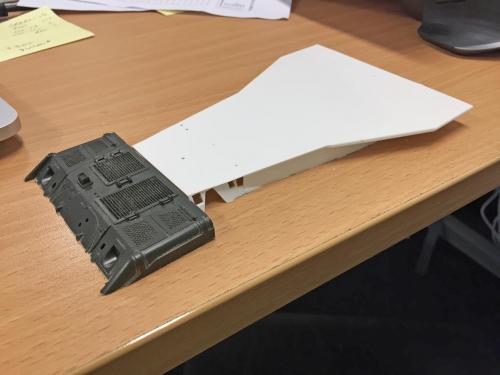
One of the parts that I decided to model for the underside is this guy.
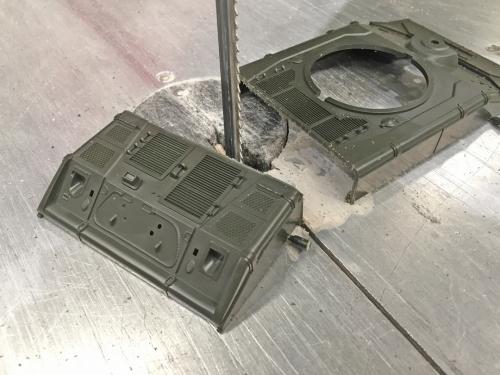
With pieces such as this I usually tend to do a 3D scan first to get a basis for the model. The original part was however so large that it proved difficult for my setup to scan. Hence, I figured I needed to break down the problem by cutting the part in half.
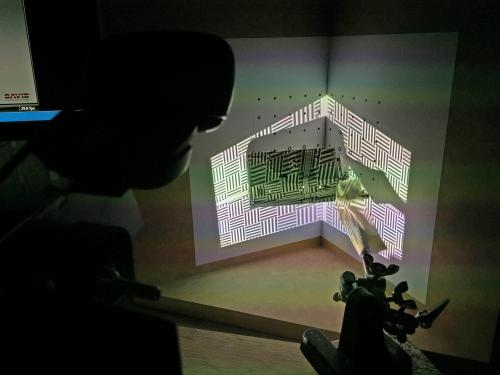
This meant that I could take multiple scans from several angles and stitch them together.
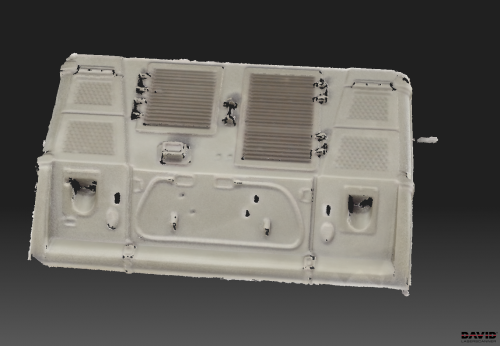
Then it's all about using pictures, and taking measurements to help capture all the details.
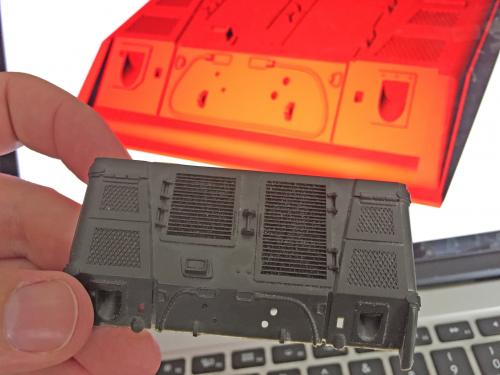
The hope was to see this through to completion however it's still a work in progress. I really need to get a better scan of this part as a reference, and perhaps a better scanner.
And since I was in styrene cutting mode I figured that I'd have a go at this piece.
WARNING: DON'T TRY THIS AT HOME!

I have shown this to two other builders and they were both a bit surprised, and horrified at the same time.
A circular panel saw makes short work of this operation but I would not recommend it.
It's extremely dangerous having fingers anywhere near these things generally. And it wasn't removing the material in the cleanest manner. More like taking small chunks. Maybe it just needs a new blade, i'duno...
The resulting pieces were also both sanded down in height to reach the final size.
To be honest, I'll probably sand them a fraction more to match my references, but overall very happy with how they turned out all things considered.
As a side,
I also took the time to try some cleanup on some original parts that a good friend had generously given me. These were caked with enamel paint and were pretty ghastly.
I accidentally discovered a while ago that rubbing alcohol is actually good for removing the enamel paint and doesn't seem to effect the original styrene too much. If doing this yourself I'd try it on a less critical piece first. Instead of a part from a $2,000 kit.
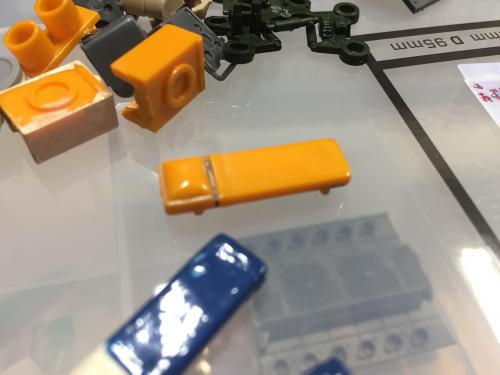
The process takes a while to do, but I find it's the perfect task whilst binging on you favorite StudioScale YouTube video's.
One of the parts that I decided to model for the underside is this guy.
With pieces such as this I usually tend to do a 3D scan first to get a basis for the model. The original part was however so large that it proved difficult for my setup to scan. Hence, I figured I needed to break down the problem by cutting the part in half.
This meant that I could take multiple scans from several angles and stitch them together.
Then it's all about using pictures, and taking measurements to help capture all the details.
The hope was to see this through to completion however it's still a work in progress. I really need to get a better scan of this part as a reference, and perhaps a better scanner.
And since I was in styrene cutting mode I figured that I'd have a go at this piece.
WARNING: DON'T TRY THIS AT HOME!
I have shown this to two other builders and they were both a bit surprised, and horrified at the same time.
A circular panel saw makes short work of this operation but I would not recommend it.
It's extremely dangerous having fingers anywhere near these things generally. And it wasn't removing the material in the cleanest manner. More like taking small chunks. Maybe it just needs a new blade, i'duno...
The resulting pieces were also both sanded down in height to reach the final size.
To be honest, I'll probably sand them a fraction more to match my references, but overall very happy with how they turned out all things considered.
As a side,
I also took the time to try some cleanup on some original parts that a good friend had generously given me. These were caked with enamel paint and were pretty ghastly.
I accidentally discovered a while ago that rubbing alcohol is actually good for removing the enamel paint and doesn't seem to effect the original styrene too much. If doing this yourself I'd try it on a less critical piece first. Instead of a part from a $2,000 kit.
The process takes a while to do, but I find it's the perfect task whilst binging on you favorite StudioScale YouTube video's.